Pedal Modification • Switching • Signal Routing
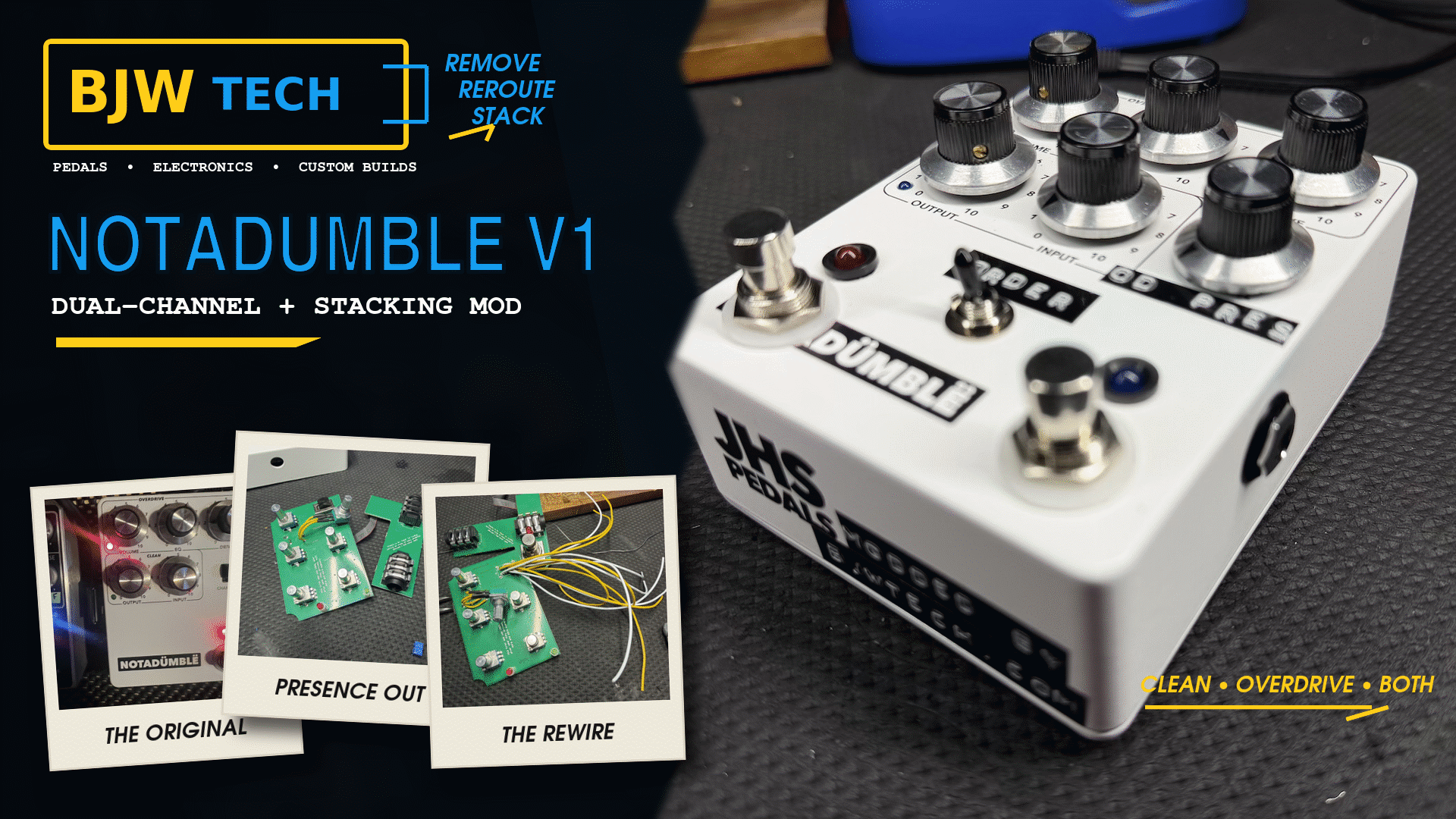
JHS Notadumble V1.
Two Independent Channels.
The original Clean and Overdrive circuits were kept intact, but the way the player controls and routes them was completely reworked — external Presence, independent footswitches, simultaneous stacking and selectable channel order.
01 • External Presence Control
Turn an internal adjustment into a real control.
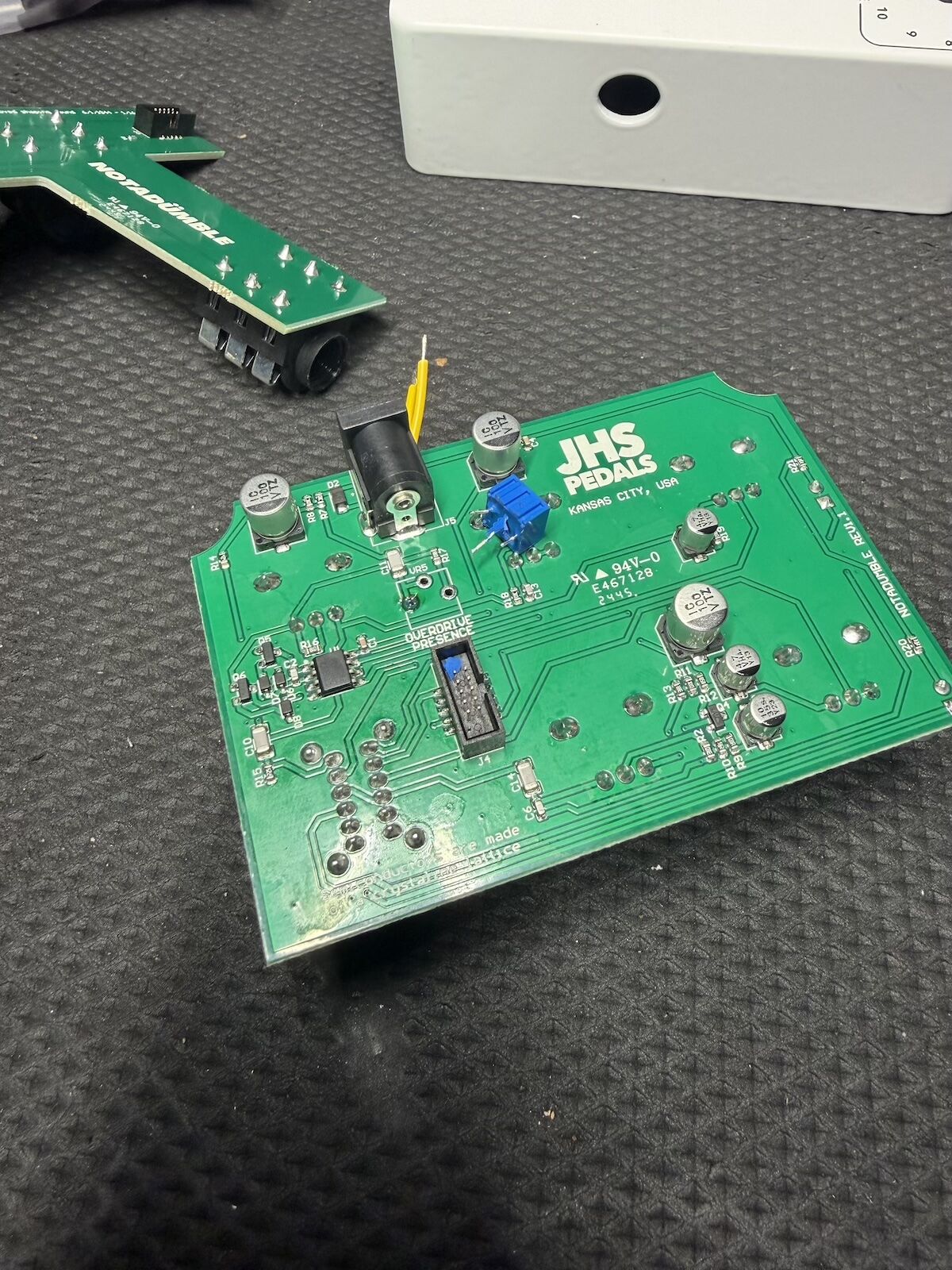
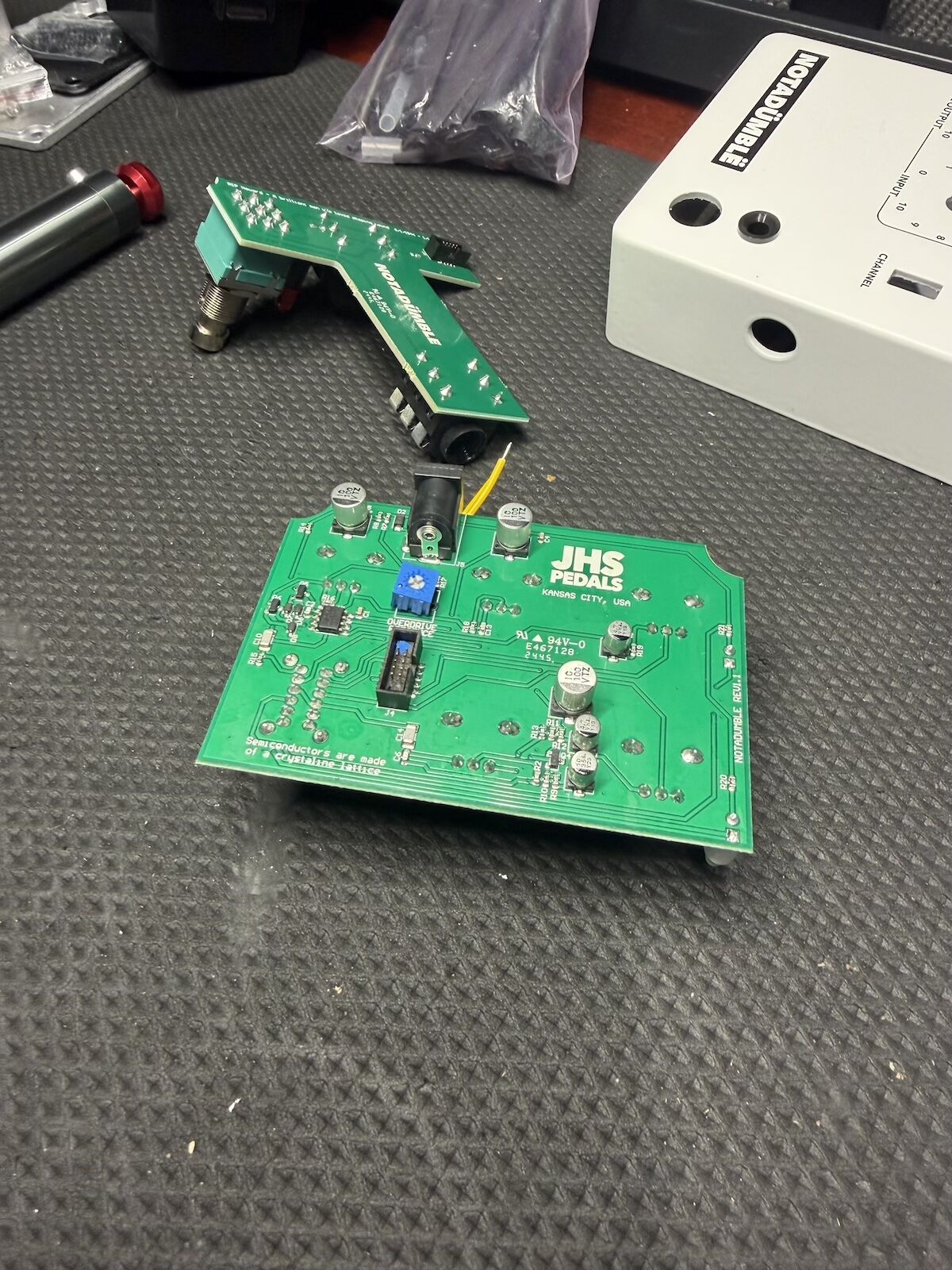
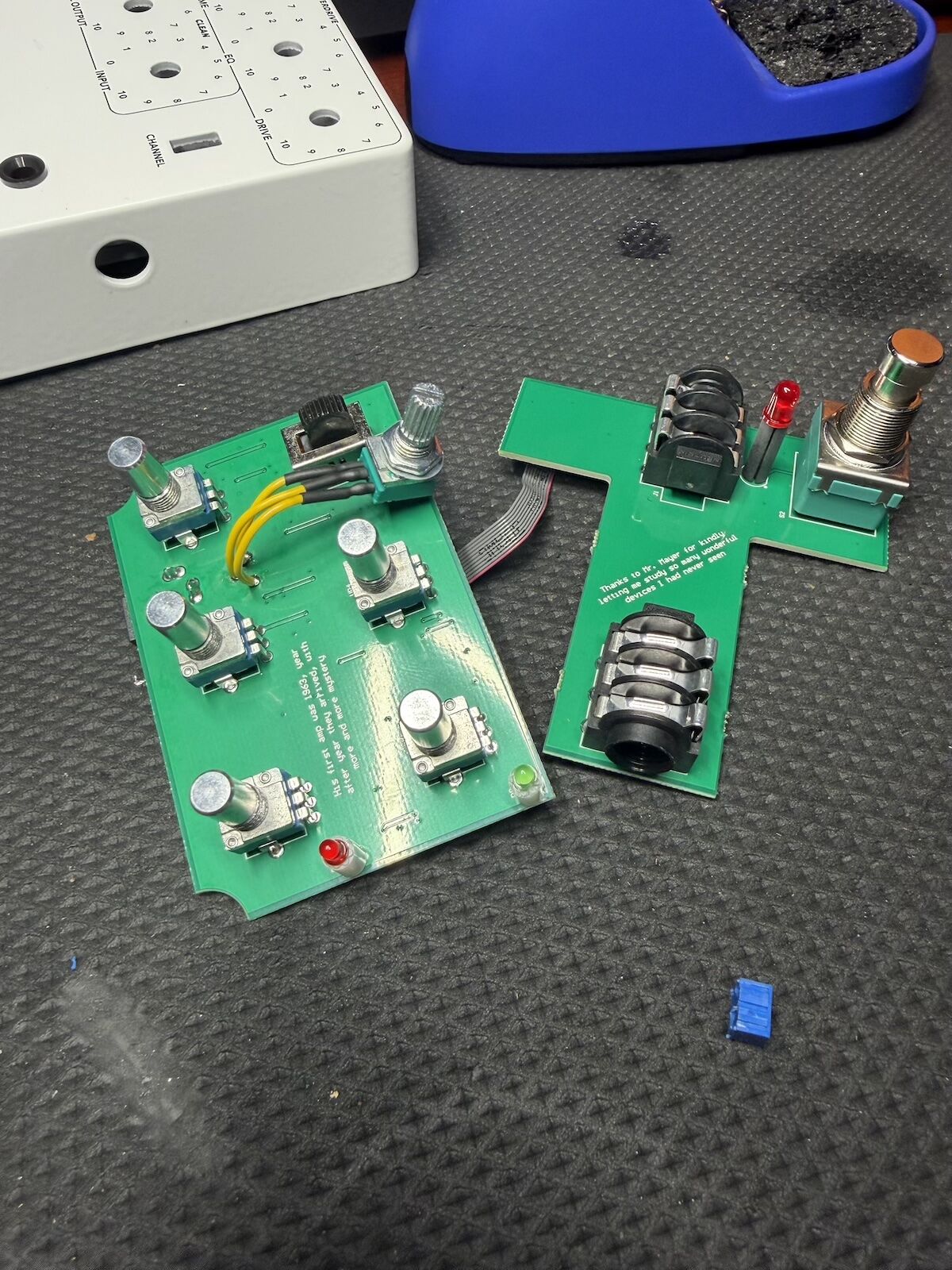
The Notadumble V1’s Overdrive Presence adjustment was originally a small trimpot hidden inside the enclosure. The factory trimpot was removed and replaced with a full-size 10k potentiometer, making Presence accessible as a normal external control.
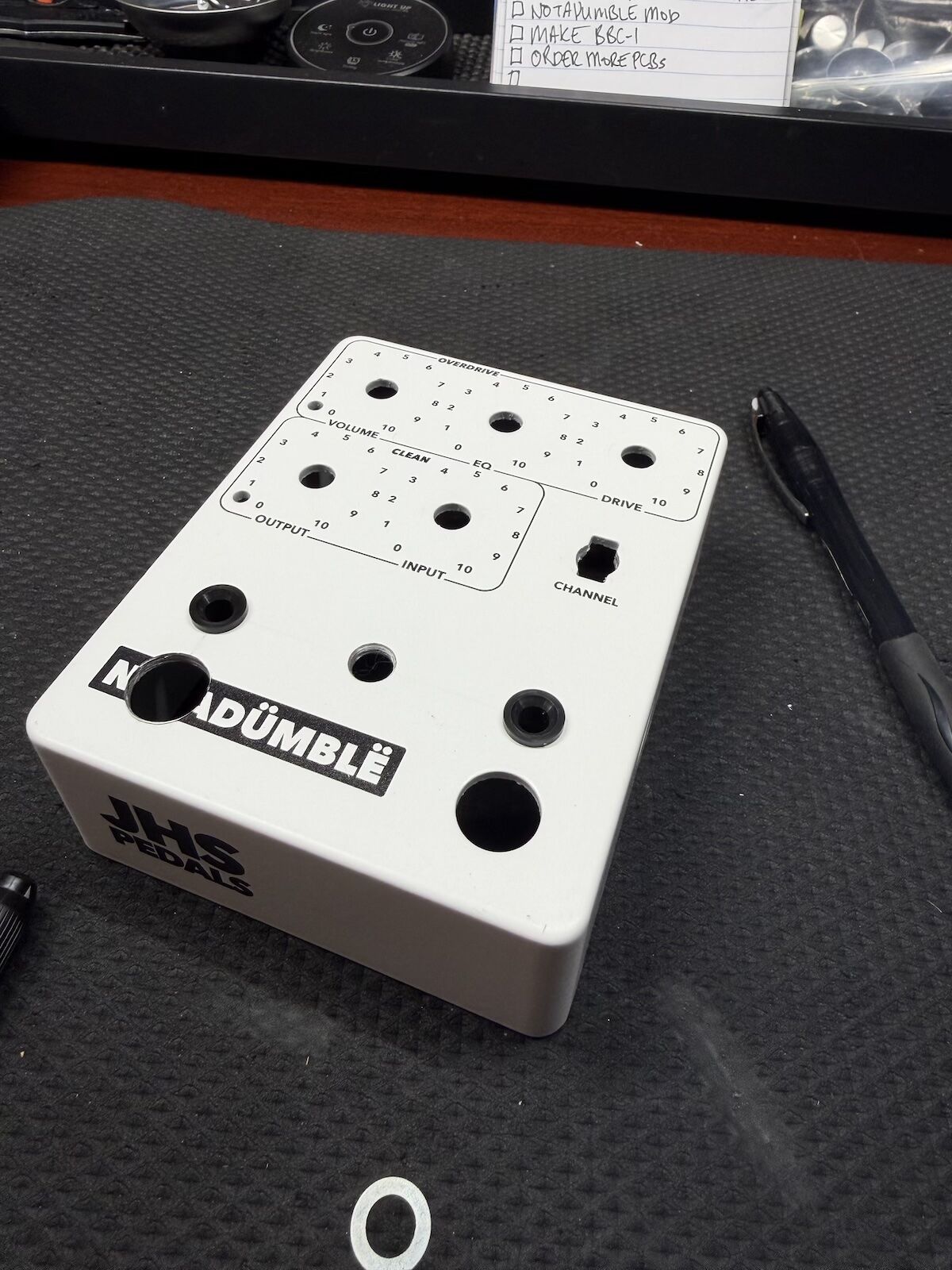
The original Channel Selector switch was also going to be removed as part of the new dual-channel switching system. Rather than leave its front-panel opening unused, I installed the new Presence control in that location.
02 • Removing the Original Switching Hardware
Carefully dismantling the factory selector.
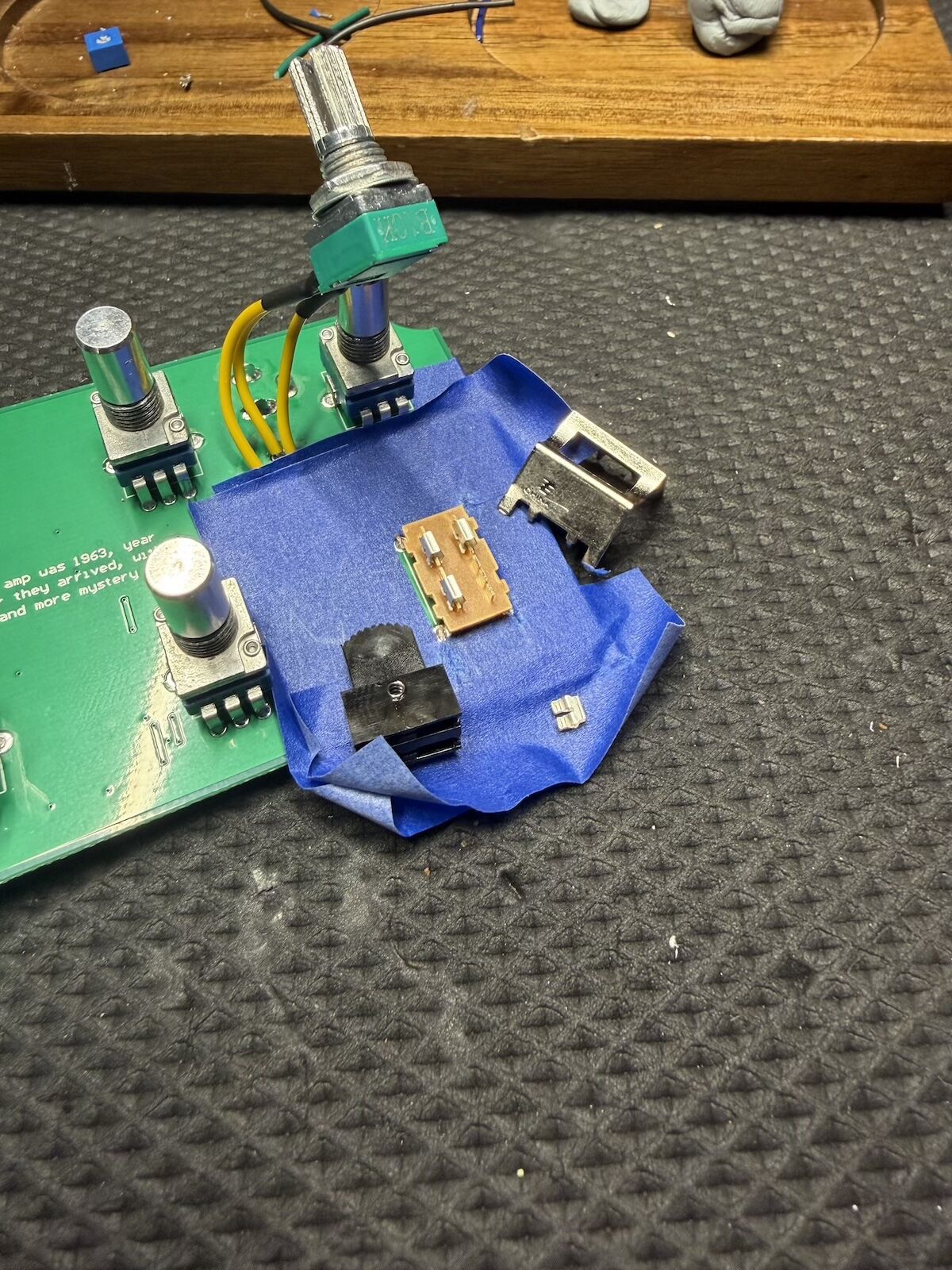
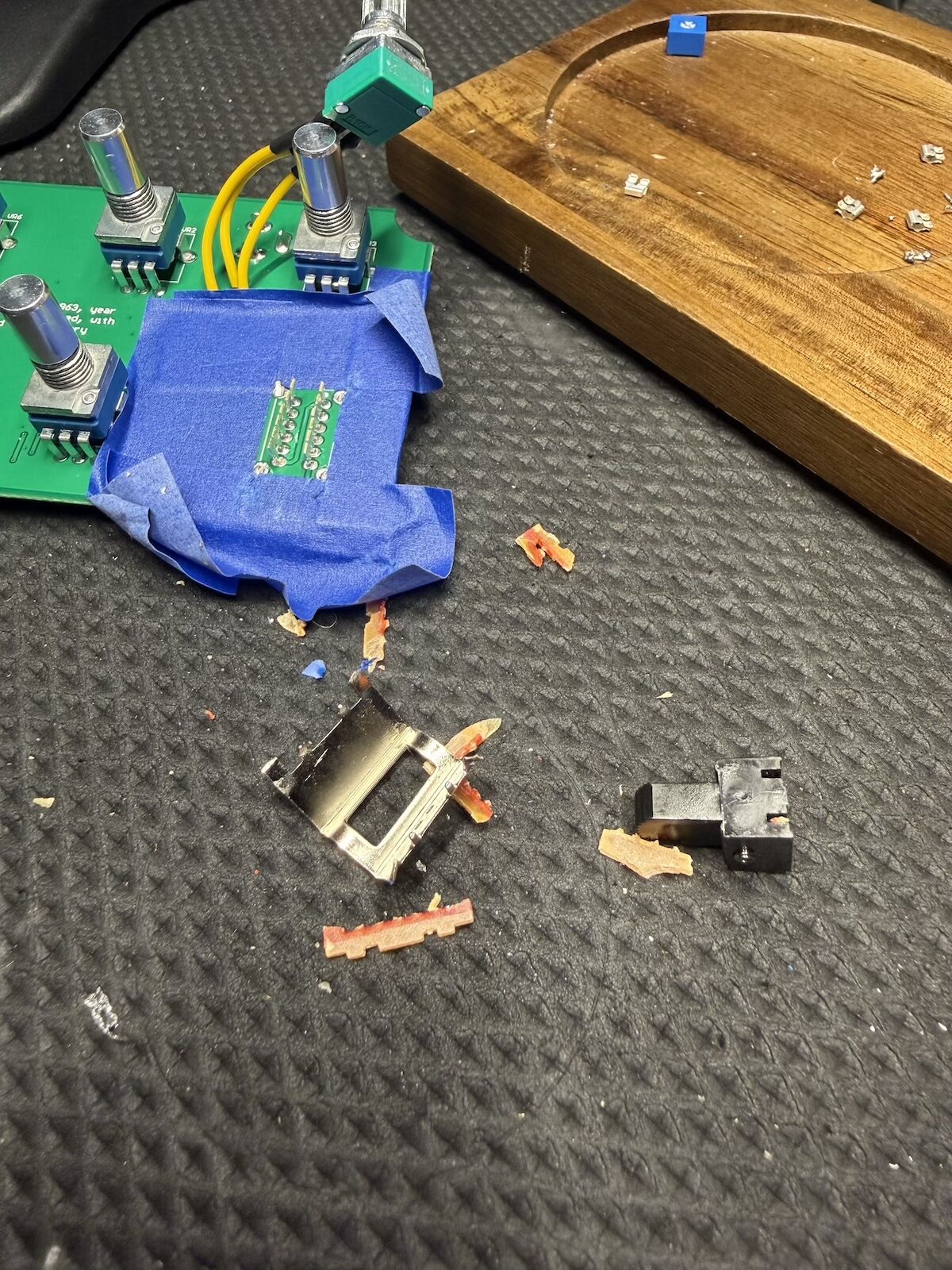
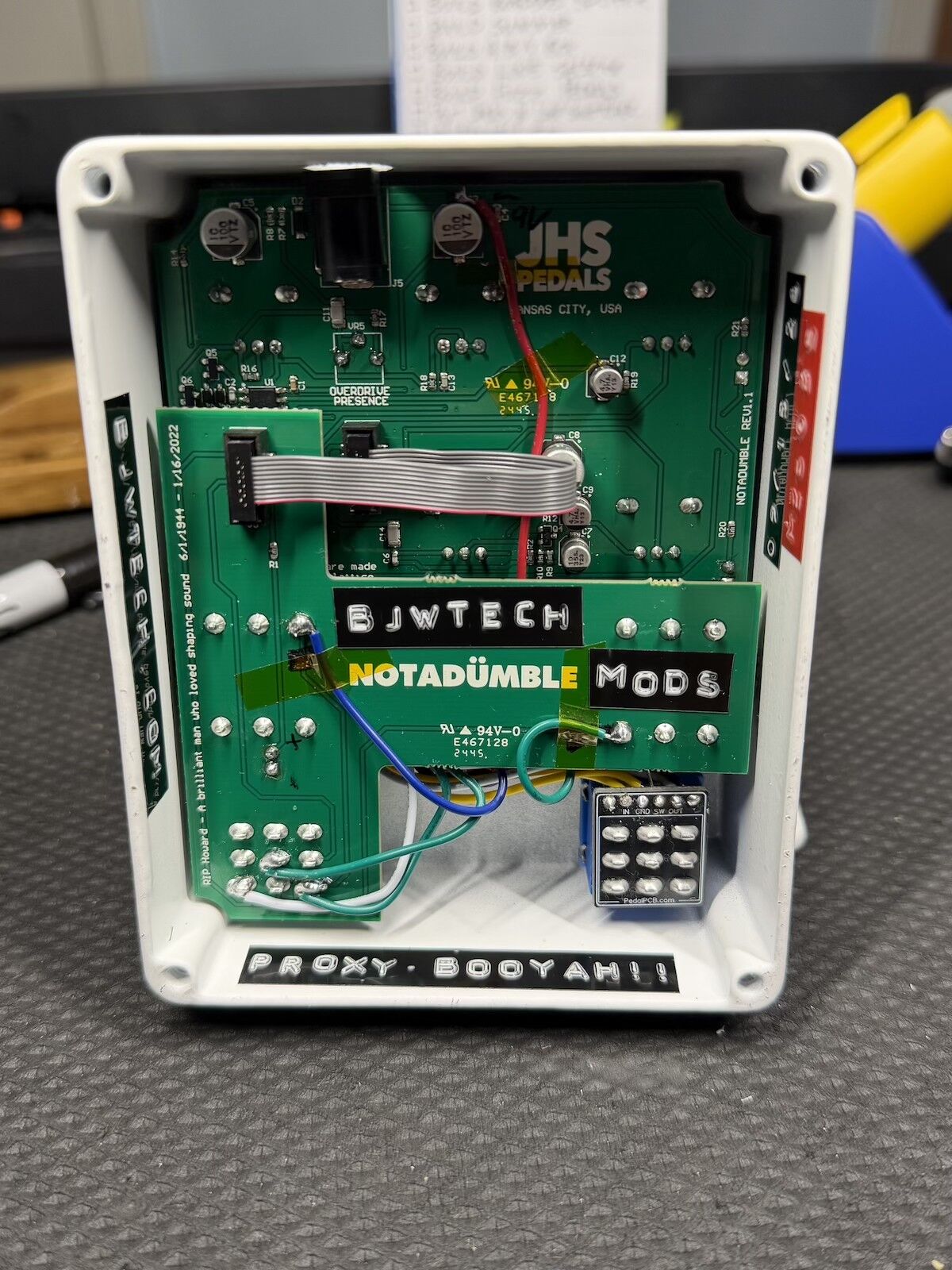
The factory Channel Selector could not support independent Clean and Overdrive switching, simultaneous channel operation, or selectable stacking order. It had to be carefully dismantled without damaging the surrounding circuit boards or their connection points.
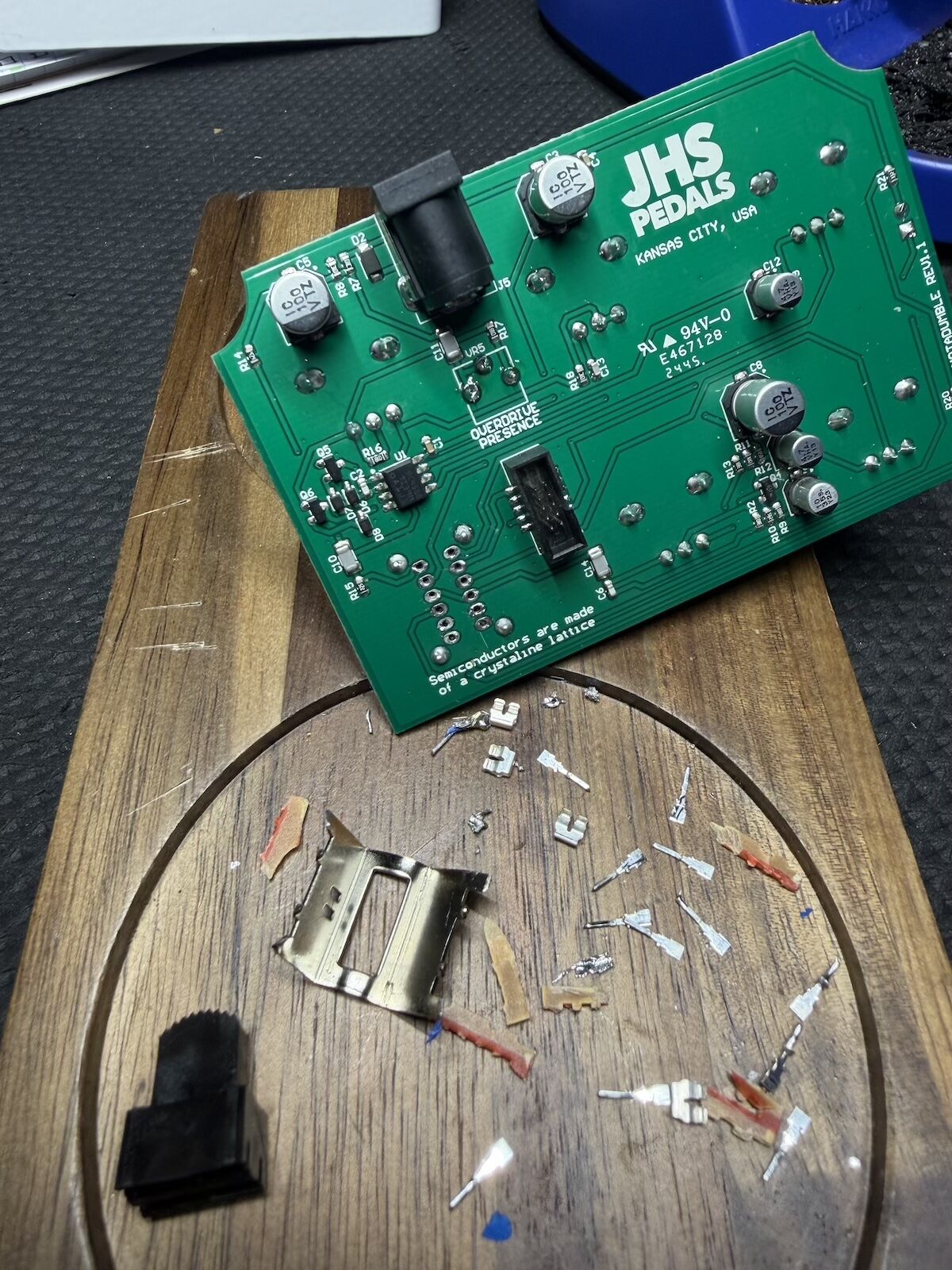
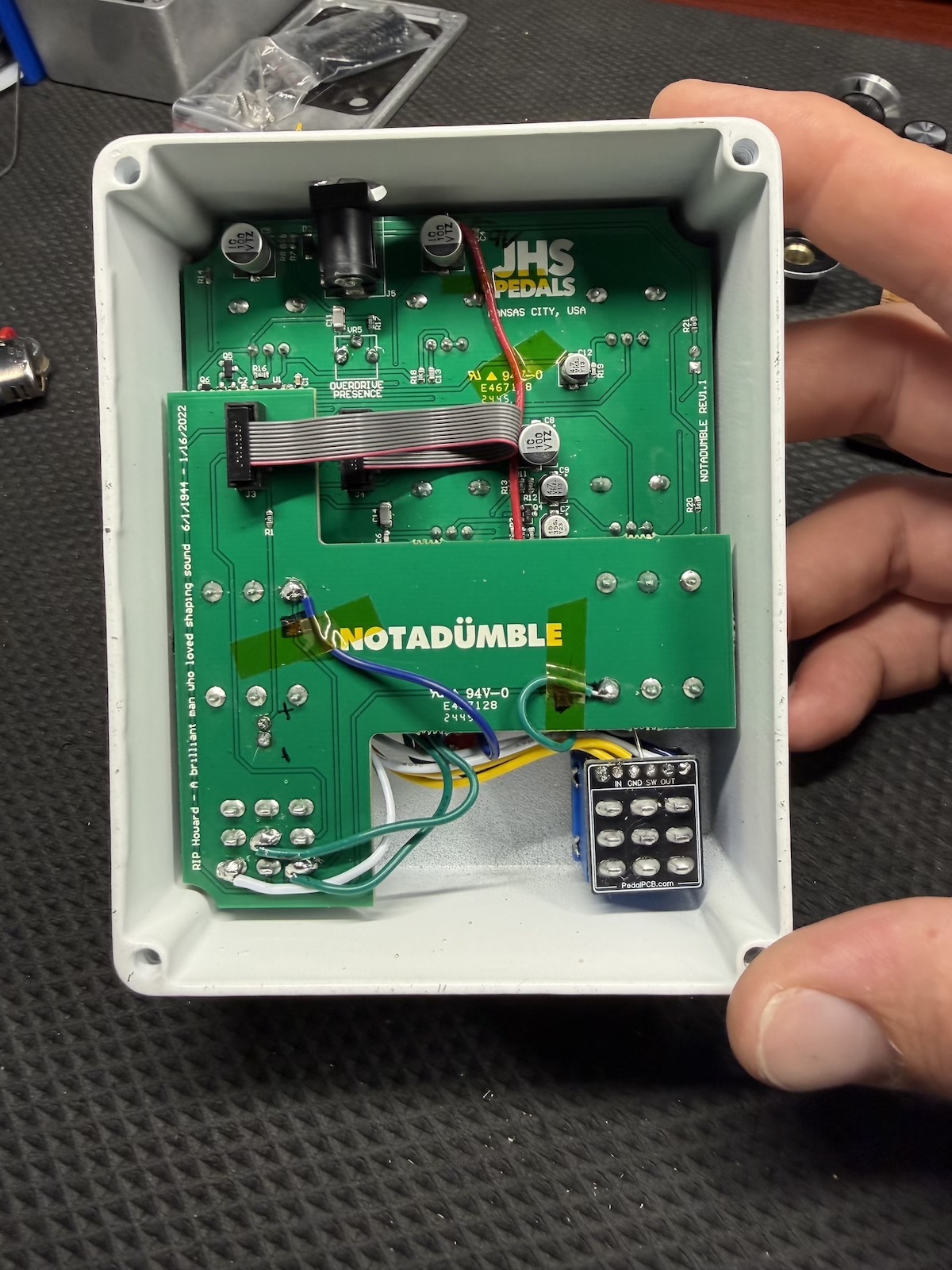
After removing the switch housing, contacts, and remaining hardware, I cleaned and prepared the exposed pads. Individual wires were then installed in place of the original switch connections, allowing the Clean and Overdrive signal paths to be rerouted through the new footswitching and channel-order system.
03 • Rerouting the Original Channel Connections
The original channel connections, rerouted.
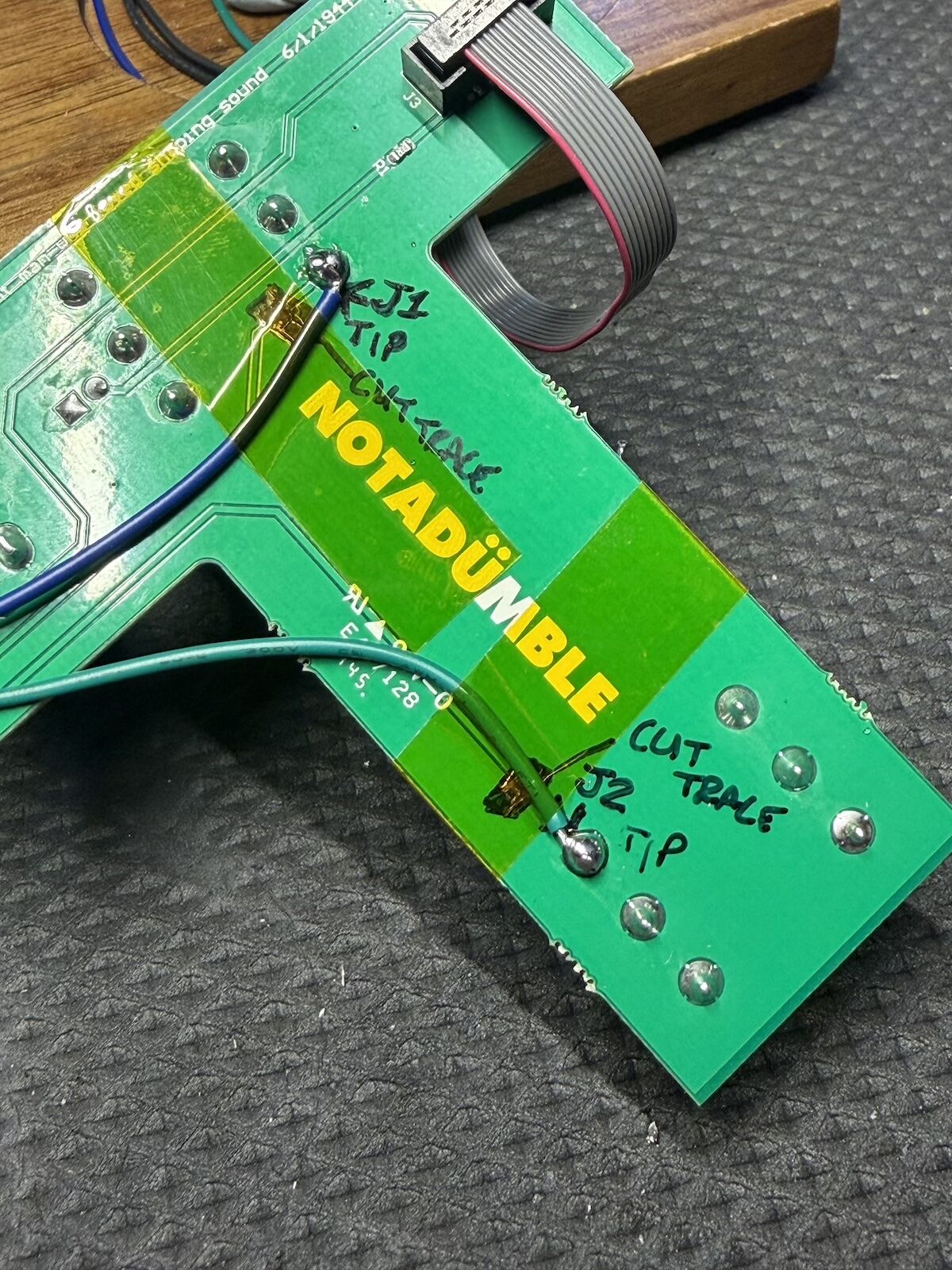
With the factory selector removed, the original Clean and Overdrive signal paths had to be separated and brought into the new switching system. The necessary PCB tap points were identified, and specific traces were cut to isolate the connections that had previously been controlled by the Channel Selector.
The enclosure was then drilled for the second footswitch, additional LED, order toggle, and external Presence control. Each new wire was labeled and routed to the appropriate footswitch or toggle connection, with the completed paths checked for continuity before final assembly.
This preserves the pedal’s original Clean and Overdrive circuits while replacing the way their inputs and outputs are selected and interconnected.
04 • Organized Cable Management
More wiring, carefully routed.
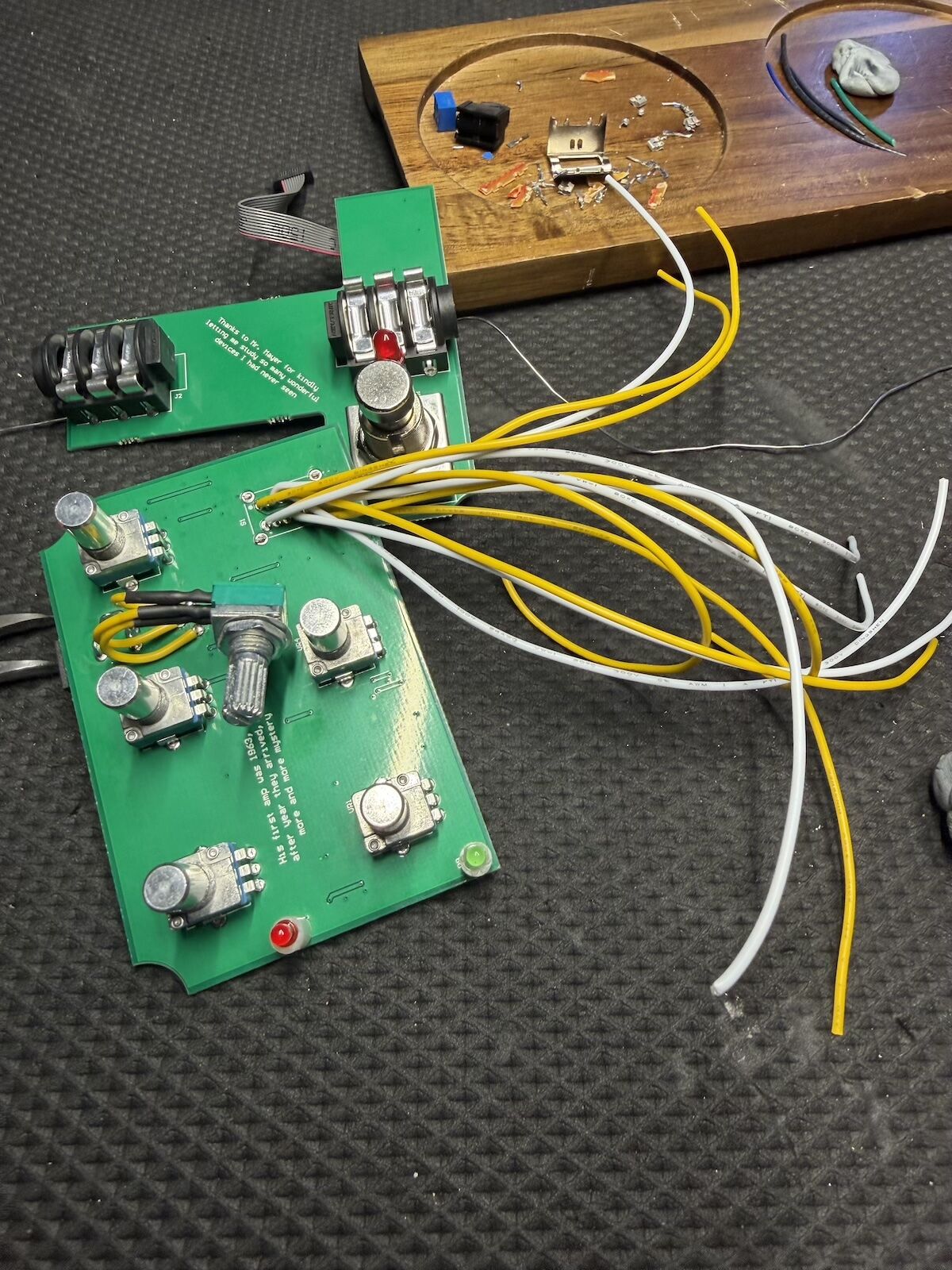
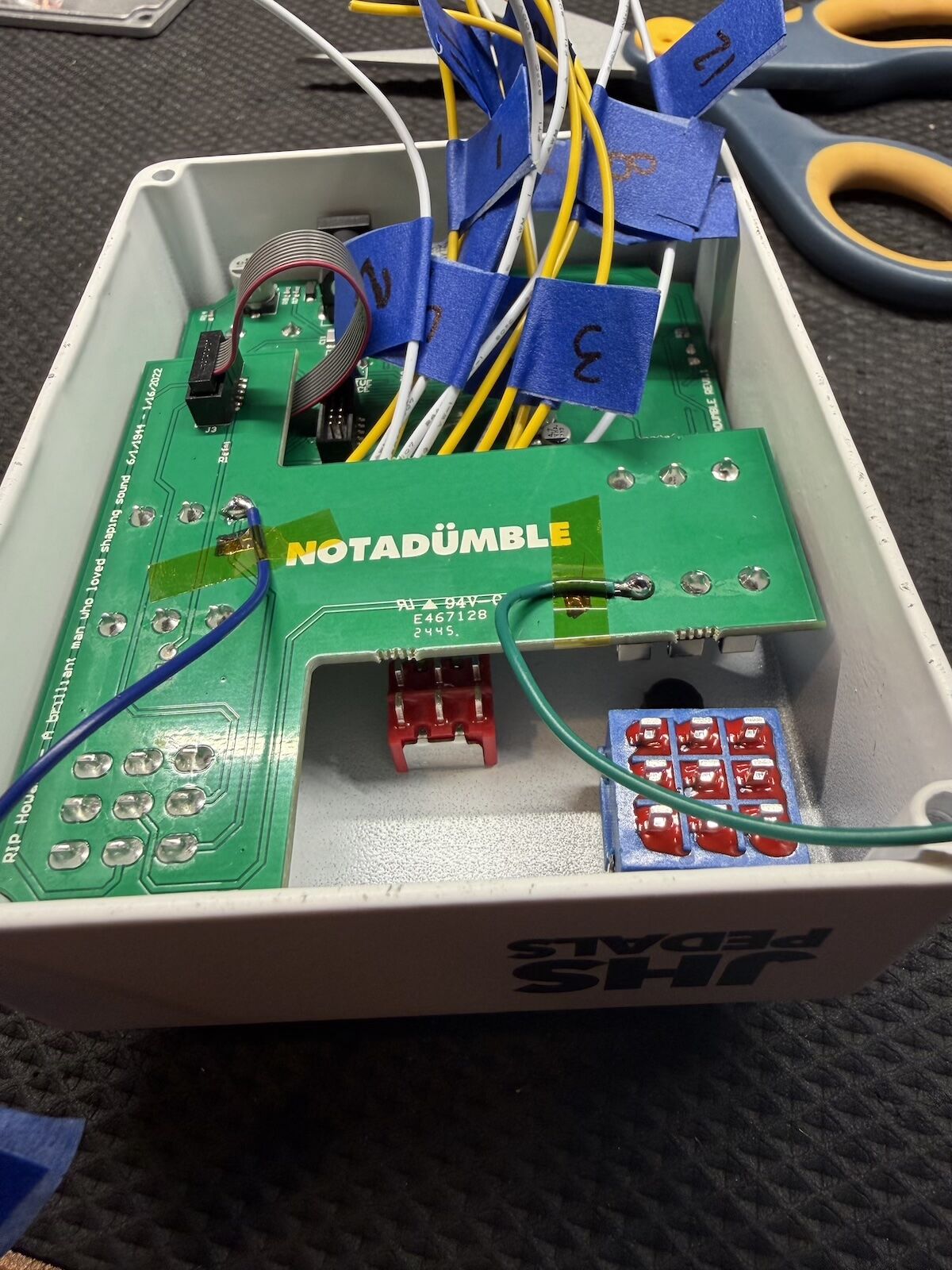
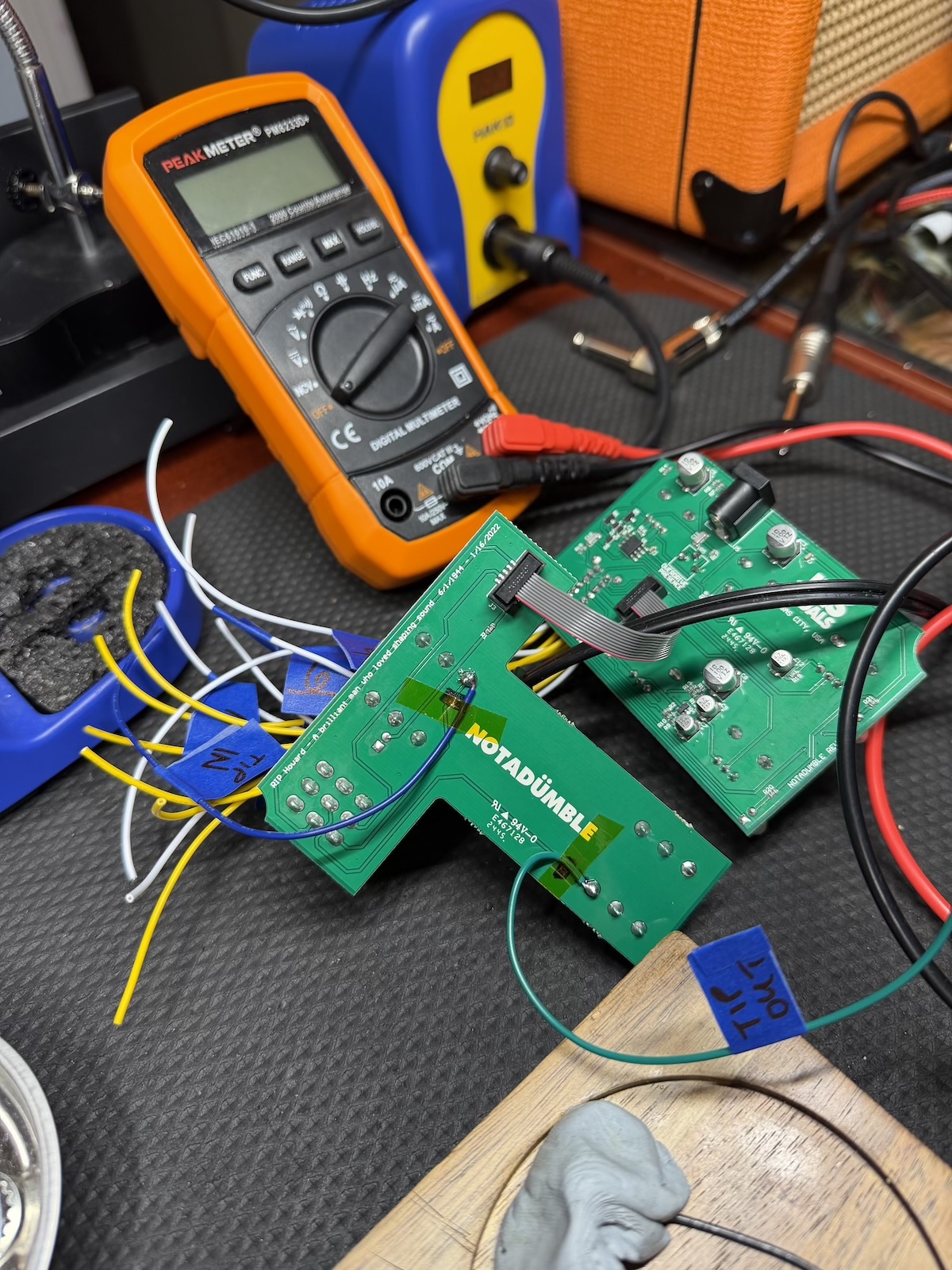
The new switching architecture required considerably more point-to-point wiring than the factory design. Each lead was labeled during assembly so its destination remained clear while the circuit boards, footswitches, LEDs, and order toggle were connected and tested.
After the connections were verified, the wire lengths were carefully routed through the available spaces beneath and around the factory circuit boards. This kept the added wiring away from the enclosure hardware, reduced strain on the solder joints, and preserved access to the modified switching system for future inspection or service.
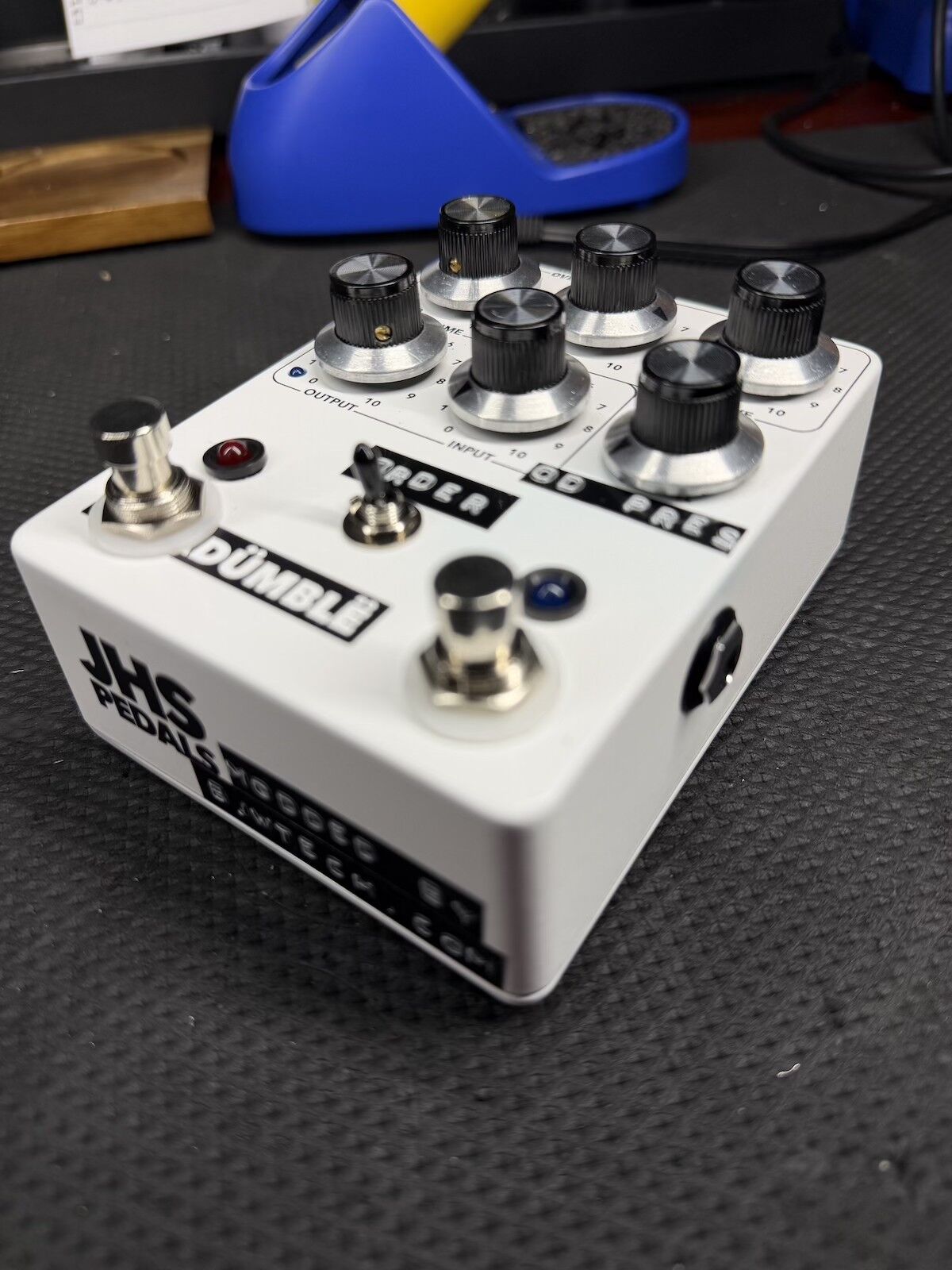
The completed pedal retained its original Clean and Overdrive circuits while adding independent channel control, simultaneous operation, reversible stacking order, and an external Presence adjustment.
05 • Before, After & Final Testing
The same two circuits, with a completely different workflow.
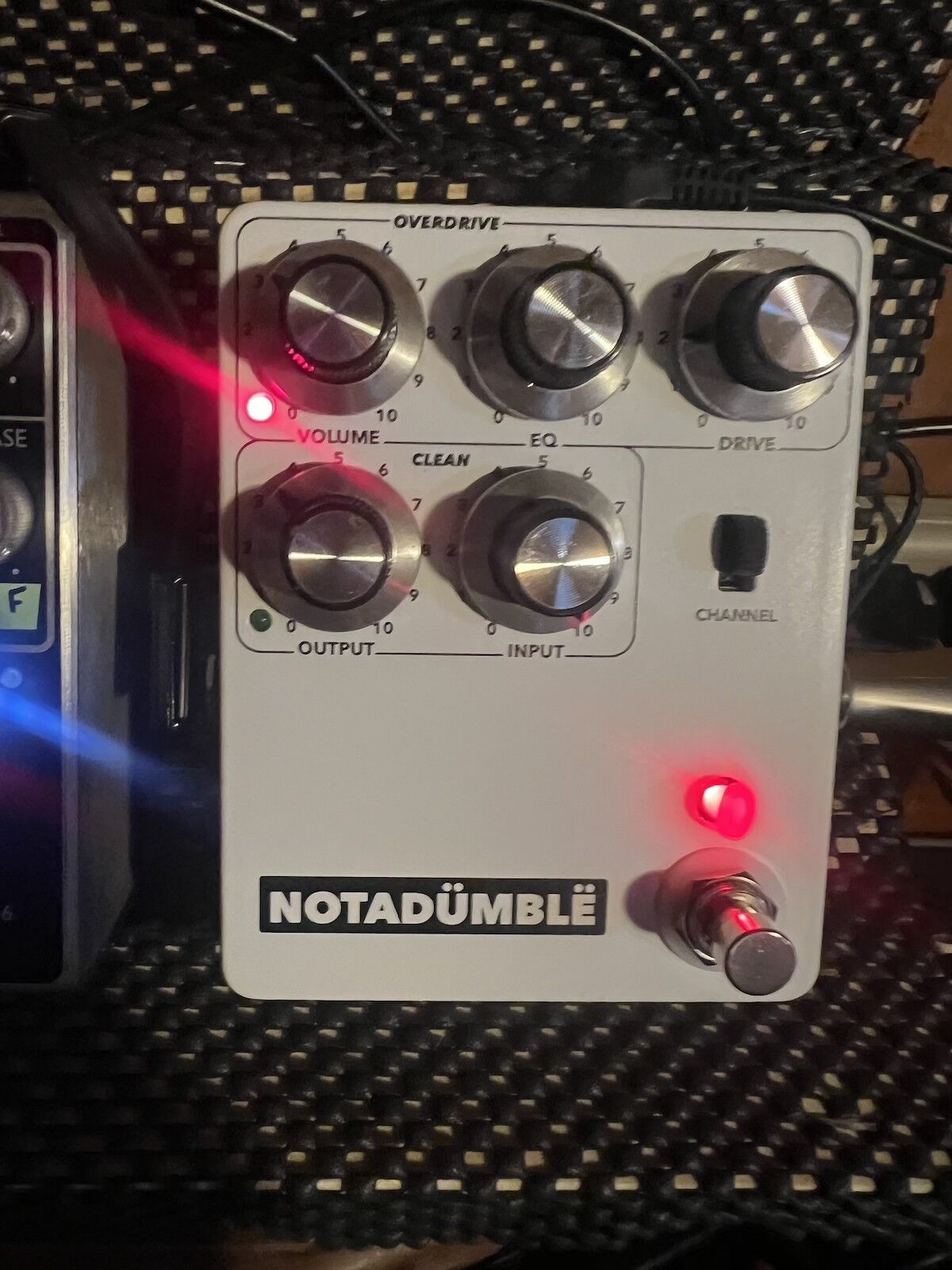
The original Notadumble provided a single footswitch and a Channel Selector that allowed the player to choose between its Clean and Overdrive circuits. The modification retained both original audio circuits while completely redesigning how they are selected, combined, and controlled.
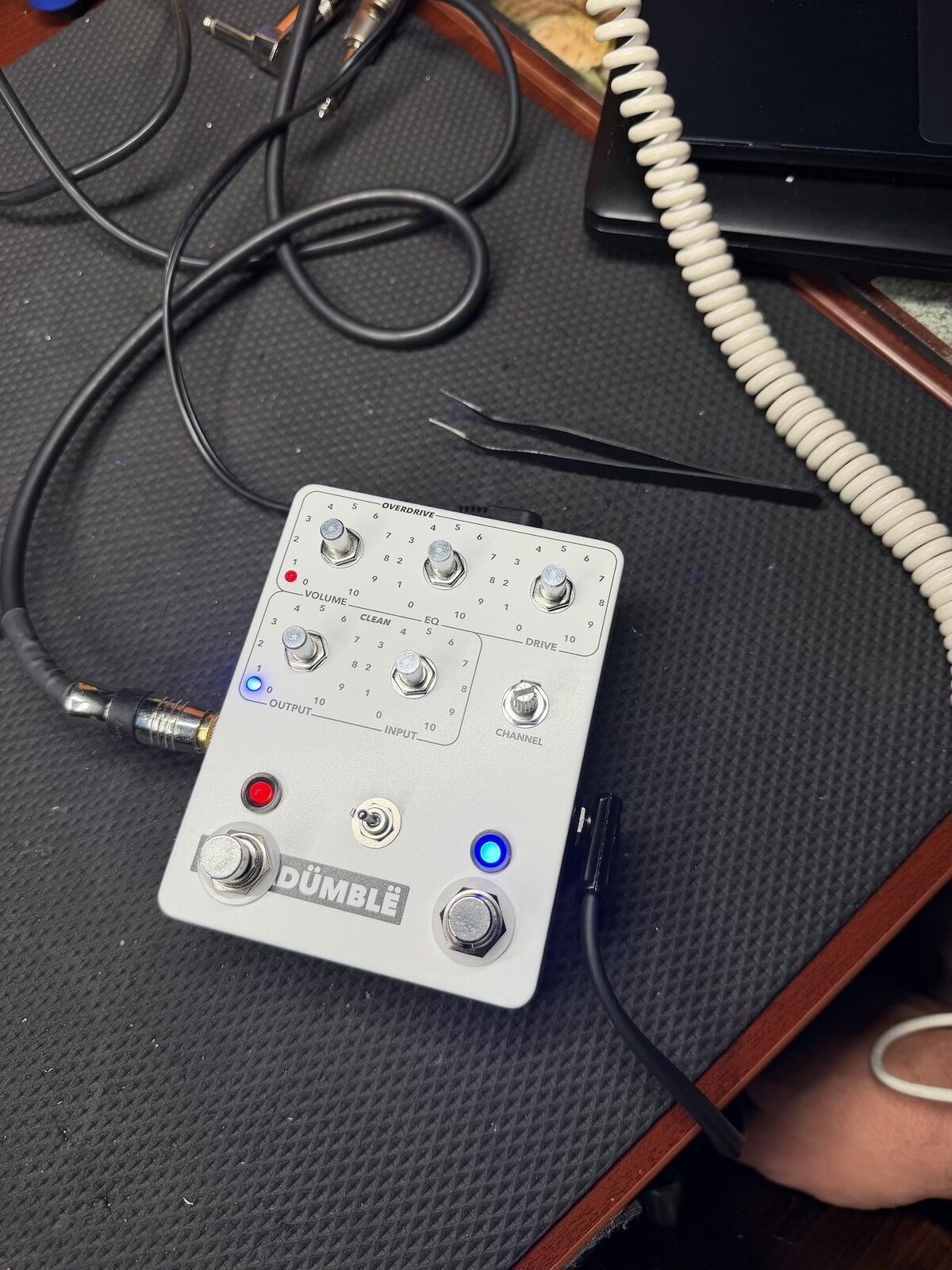
Before final assembly, the new signal paths were checked extensively with continuity measurements, switching tests, and repeated audio tests. Every operating combination was verified: Clean alone, Overdrive alone, both channels stacked, and both available stacking orders.
The finished pedal now provides two independent footswitches, separate channel LEDs, selectable stacking order, and an external Overdrive Presence control. Either channel can be used independently, or both can operate together with the player choosing which circuit feeds the other.
Have an Idea?
A pedal does not have to stay the way it left the factory.
If you have an effect with controls, switching or routing you wish worked differently, get in touch and we can talk through what may be possible.
Discuss a Modification